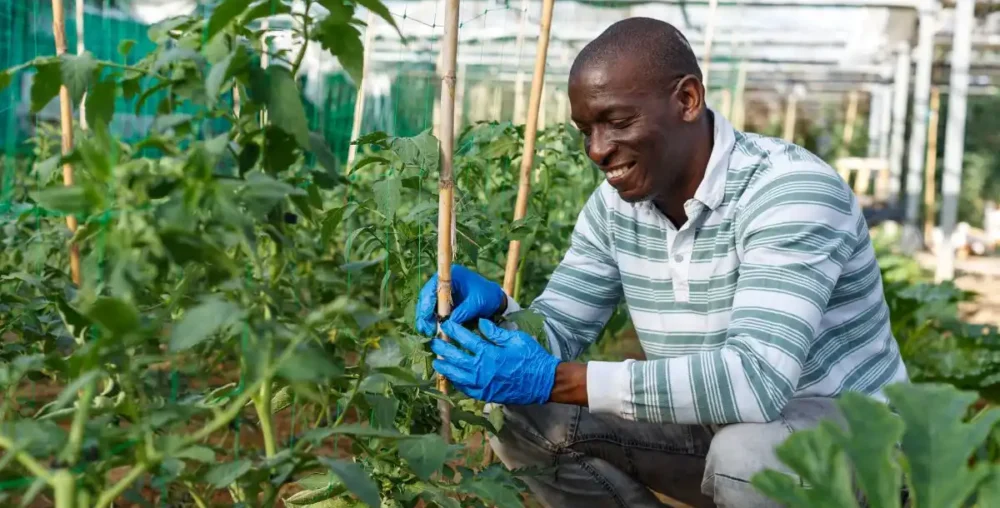
A structured environmental framework designed to protect resources while enabling scalable agricultural performance.
Sustainability at Soumah Agriculture is not treated as a peripheral objective, but as a structural foundation of the entire platform. The project is designed to balance productivity with long-term land preservation, resource efficiency, and environmental resilience.
Agricultural expansion across emerging markets often faces the risk of soil degradation, water mismanagement, and ecosystem stress. Soumah Agriculture addresses these risks by embedding regenerative practices and controlled resource management directly into its operational model.
The sustainability framework ensures that growth does not compromise ecological integrity, but rather reinforces long-term agricultural viability.
Agricultural intensification without structured environmental management can lead to declining soil fertility, inefficient water usage, and long-term productivity loss.
Soumah Agriculture mitigates these risks through:
• Optimized irrigation systems reducing water waste
• Soil fertility monitoring and regeneration strategies
• Controlled input management to limit chemical dependency
• Crop rotation and land optimization models
• Circular integration between crop and livestock systems
These measures strengthen operational sustainability while preserving natural capital.
The sustainability framework supports climate adaptability, land conservation, and responsible resource utilization.
Rather than pursuing short-term yield maximization at ecological cost, Soumah Agriculture adopts a structured approach that aligns production scale with environmental capacity.
This framework reinforces investor confidence by ensuring that operational growth remains compatible with regulatory standards, environmental expectations, and long-term agricultural durability.